Now Available

NEW FROM ROUTLEDGE 2026

'Capital' as Literature: Marx Against Himself


’CAPITAL’ AS LITERATURE: MARX AGAINST HIMSELF


Studies of Marx, particularly of his masterwork Capital (1867), are as a rule tutelary—they attempt to explain him. Even literary readers of Marx, from Raymond Williams to Fredric Jameson, seek to secure Marxist tenets by means of Marxian style. ‘Capital’ as Literature: Marx Against Himself departs from this tradition by reading Capital as literary in its own right rather than as political economy with style as its filigree rather than its focus. Here, Marx emerges in a different light. If literature is writing that calls whatever is settled into question, then Marx's writing is literature, not because of its revolutionary program, but because Marx's rhetoric, particularly its key trope of chiasmus, undoes the coherence of the notions it propounds, especially in Capital. Marx's chiasmatic style turns Capital into a mise en abyme and Marx's enterprise into an example of what it describes rather than its foil or antidote: the structure of capital itself. Capital, like capital, is a self-begetting production machine whose fungibility as a form is one and the same with the money economy it unravels. ‘Capital’ as Literature: Marx Against Himself shows how this irony unfolds and what the implications are for epistemology, cultural studies, and literary criticism.


ALSO FROM ROUTLEDGE 2022

Criticism After Theory from Shakespeare to Virginia Woolf


CRITICISM AFTER THEORY FROM SHAKESPEARE TO VIRIGINIA WOOLF

The argument of this book is a simple one: that criticism after theory is a single movement of thought defined by synthesis and continuity rather than by conflict and change. The most influential figures in criticism since Saussure—Bakhtin, Derrida, and Foucault—are wholly consistent with Saussure's foundational Course in General Linguistics (1916) no matter the traditions of complaint that have followed in Saussure's wake from Bakhtin forward. These complaints vitiate—despite themselves and often hilariously so—the misconceptions that have made cottage industries out of quarrels with Saussurean semiology that are based on notions of Saussure that are incorrect. The materialist criticism dominant today is actually dependent upon on the legacy of a presumably formalist structuralism rather than a step beyond it. New Historicism, postcolonialism, gender studies, environmental criticism, archive studies, even shared and surface reading are, like deconstruction, the by-products of Saussure's structuralism, not its foils. Saussure's sign is sensory and concrete. Language and materiality are not distinct but one and the same—history, society, the psychological subject, even the environment are systems of signs, material archives read and reread by futures that produce the past after the fact. Without Saussure, contemporary criticism would have no identifiable or effective source. The book begins with chapters on Saussure and Derrida, Bakhtin and Shakespeare, and Freud and Foucault followed by chapters on Victorian and American fiction, D.H. Lawrence and modern poetry, Virginia Woolf and Melanie Klein, and the historicist tropology of psychoanalysis. It concludes with a coda in life writing on the author's epileptic disability.


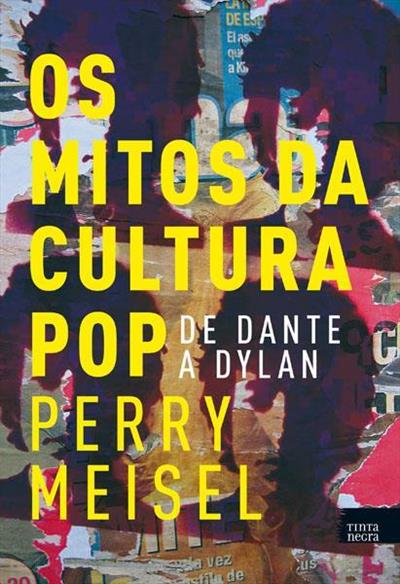
Portuguese translation of THE MYTH OF POPULAR CULTURE (Blackwell Manifestos, 2010) now available from Tinta Negra (Rio de Janeiro, 2015)


OS MITOS DA CULTURA POP: DE DANTE A DYLAN


O renomado crítico cultural americano Perry Meisel detona as noções convencionais sobre a divisão entre “alta” e “baixa” cultura.

O autor transita pela provocante teoria de que a cultura pop experimentou ritmos dialéticos. A hábil análise que o livro apresenta de três tradições culturais duradouras – o romance norte-americano, Hollywood, e o rock inglês e americano – nos leva a um ciclo histórico da cultura pop que tem Dante como ponto de partida e revisita ícones como Wahrol, Melville, Hemingway, Twain, Eisenstein, Benjamin, Scorsese e Sinatra.


THE MYTH OF POPULAR CULTURE: FROM DANTE TO DYLAN


The Myth of Popular Culture discusses the dialectic of "highbrow" and "lowbrow" in popular culture through an examination of literature, film, and popular music. With topics ranging from John Keats to John Ford, the book responds to Adorno's theory that popular culture is not dialectical by showing that it is.

Available as eBooks

COURSE IN GENERAL LINGUISTICS. Trans. Wade Baskin. Co-ed. with Haun Saussy. By Ferdinand de Saussure (Columbia University Press, 2011)

THE MYTH OF POPULAR CULTURE: FROM DANTE TO DYLAN
(
Blackwell Manifestos, 2010)

THE LITERARY FREUD (Routledge, 2007)

THE COWBOY AND THE DANDY: CROSSING OVER FROM ROMANTICISM TO ROCK AND ROLL (Oxford University Press, 1998)

FREUD: A COLLECTION OF CRITICAL ESSAYS (Prentice-Hall, 1981)


4/20/10

Cannonization: What Adderley Can Teach Us

by Perry Meisel

Cannonball Adderley was the first jazzman I ever listened to when I was a kid. I was fumbling around with my first alto, age 10 or so, when Cannon burst into my world with all the authority of a mentor and all the assurance of a god. Cannon recast Parker just enough to make the Moves easier to understand and, what's more, he lingered over the resonance of each gold note he played with a luxury Bird's relentless appetite had forbidden. His impeccable lyricism made every phrase a melody and every improvised chorus a whole tune that would've taken most songwriters days to piece together on their own. Dead at 46 on August 8, 1975, Cannon was remembered as a preeminent figure in the story of hard bop.
But he was also remembered as a sell-out. That was the second chapter to Cannon's career, the chapter that began seedlike around 1963, the context of Milestone's posthumous issue of the full "Japanese Concerts," and that flowered naturally from it (and from Horace Silver's gospel innovations) into a funky style of jazz with roots in the blues predilections of bop itself, the focus of Capitol's "Music, You All," a posthumous issue of a 1971 Troubadour gig in L.A. The Quintet's historic turn to the soulful drew sneers from the day's critics and jeers from the usual avant-gardists, who were even willing to scorn the edifice of bop, not to mention a chickenshack r&b that seemed to signify the conventions they were hellbent on exploding. Yet here was Cannonball resurrecting that funk tradition right out there on the mainstream circuit. It was one thing to consign Getz and Desmond to the fading world of penny-loafers and the Kingston Trio, but it was another to feel compelled to do something similar to Cannonball Adderly, who'd blown next to Trane every night for two years in that legendary Miles Davis sextet of the late '50s.
What's amazing to realize now is just how prophetic Cannon's soul style of jazz has turned out to be. Walk into the clubs any time these nights and you'll hear a struggle with the bugaloo. Ron Carter's just fronted a disco album (CTI's "Anything Goes"; roll over, Cole Porter) and even Sonny Rollins managed to put a scare into lots of people a few weeks ago by threatening to rock out at Carnegie Hall. Sure, the rock/soul thing in jazz might seem like a plain cash-in with the spate of robot boogie now upon us - witness recent discs from Hancock, Corea, Cobham, Stanley Clarke, Tony Williams, Jan hammer, Lenny White. But the new and insistent presence of funkophile currents in the daily clubworks of musicians as revered as Carter, as boppish as Kenny Barron, and as flat-out talented as Dave Sanborn, should convince us that what may really be at issue is the future of a new and serious jazz idiom struggling to get born.
If the search for a new style can find a model for instruction or a legacy for assurance, it will have to be the Adderley legacy and the Adderley model. Cannon now looms as a figure far more relevant to the contemporary musical quandary than his persona would lead us to believe. Nobody in the history of jazz has played a hard soul groove with as much blues power and dense sophistication combined as Cannonball. It's just such a unified head that's lacking in the new sound and that's essential to its success. Cannon grew ever closer to the blues as the years went on, retaining still that early elegance and awesome logic, but committed to more and more of an explicit statement about where the final denominator of his art was to be found.
If Cannon long ago reserved a place for himself among the heroes of the hard bop past, a place awaits him too as a principle of unity in the music of the future. The famous bopper has suddenly become our contemporary.

Originally published in The Village Voice, February 9, 1976

Sample view: