Now Available

NEW FROM ROUTLEDGE 2026

'Capital' as Literature: Marx Against Himself


’CAPITAL’ AS LITERATURE: MARX AGAINST HIMSELF


Studies of Marx, particularly of his masterwork Capital (1867), are as a rule tutelary—they attempt to explain him. Even literary readers of Marx, from Raymond Williams to Fredric Jameson, seek to secure Marxist tenets by means of Marxian style. ‘Capital’ as Literature: Marx Against Himself departs from this tradition by reading Capital as literary in its own right rather than as political economy with style as its filigree rather than its focus. Here, Marx emerges in a different light. If literature is writing that calls whatever is settled into question, then Marx's writing is literature, not because of its revolutionary program, but because Marx's rhetoric, particularly its key trope of chiasmus, undoes the coherence of the notions it propounds, especially in Capital. Marx's chiasmatic style turns Capital into a mise en abyme and Marx's enterprise into an example of what it describes rather than its foil or antidote: the structure of capital itself. Capital, like capital, is a self-begetting production machine whose fungibility as a form is one and the same with the money economy it unravels. ‘Capital’ as Literature: Marx Against Himself shows how this irony unfolds and what the implications are for epistemology, cultural studies, and literary criticism.


ALSO FROM ROUTLEDGE 2022

Criticism After Theory from Shakespeare to Virginia Woolf


CRITICISM AFTER THEORY FROM SHAKESPEARE TO VIRIGINIA WOOLF

The argument of this book is a simple one: that criticism after theory is a single movement of thought defined by synthesis and continuity rather than by conflict and change. The most influential figures in criticism since Saussure—Bakhtin, Derrida, and Foucault—are wholly consistent with Saussure's foundational Course in General Linguistics (1916) no matter the traditions of complaint that have followed in Saussure's wake from Bakhtin forward. These complaints vitiate—despite themselves and often hilariously so—the misconceptions that have made cottage industries out of quarrels with Saussurean semiology that are based on notions of Saussure that are incorrect. The materialist criticism dominant today is actually dependent upon on the legacy of a presumably formalist structuralism rather than a step beyond it. New Historicism, postcolonialism, gender studies, environmental criticism, archive studies, even shared and surface reading are, like deconstruction, the by-products of Saussure's structuralism, not its foils. Saussure's sign is sensory and concrete. Language and materiality are not distinct but one and the same—history, society, the psychological subject, even the environment are systems of signs, material archives read and reread by futures that produce the past after the fact. Without Saussure, contemporary criticism would have no identifiable or effective source. The book begins with chapters on Saussure and Derrida, Bakhtin and Shakespeare, and Freud and Foucault followed by chapters on Victorian and American fiction, D.H. Lawrence and modern poetry, Virginia Woolf and Melanie Klein, and the historicist tropology of psychoanalysis. It concludes with a coda in life writing on the author's epileptic disability.


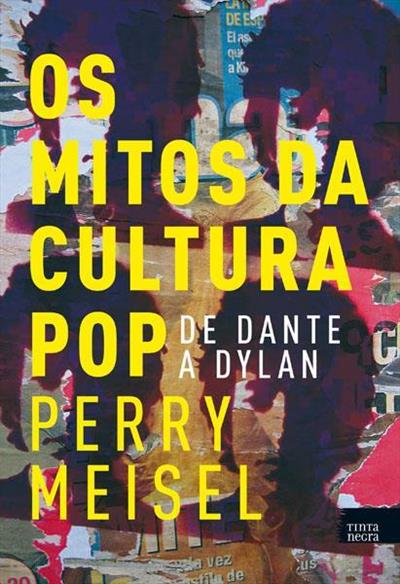
Portuguese translation of THE MYTH OF POPULAR CULTURE (Blackwell Manifestos, 2010) now available from Tinta Negra (Rio de Janeiro, 2015)


OS MITOS DA CULTURA POP: DE DANTE A DYLAN


O renomado crítico cultural americano Perry Meisel detona as noções convencionais sobre a divisão entre “alta” e “baixa” cultura.

O autor transita pela provocante teoria de que a cultura pop experimentou ritmos dialéticos. A hábil análise que o livro apresenta de três tradições culturais duradouras – o romance norte-americano, Hollywood, e o rock inglês e americano – nos leva a um ciclo histórico da cultura pop que tem Dante como ponto de partida e revisita ícones como Wahrol, Melville, Hemingway, Twain, Eisenstein, Benjamin, Scorsese e Sinatra.


THE MYTH OF POPULAR CULTURE: FROM DANTE TO DYLAN


The Myth of Popular Culture discusses the dialectic of "highbrow" and "lowbrow" in popular culture through an examination of literature, film, and popular music. With topics ranging from John Keats to John Ford, the book responds to Adorno's theory that popular culture is not dialectical by showing that it is.

Available as eBooks

COURSE IN GENERAL LINGUISTICS. Trans. Wade Baskin. Co-ed. with Haun Saussy. By Ferdinand de Saussure (Columbia University Press, 2011)

THE MYTH OF POPULAR CULTURE: FROM DANTE TO DYLAN
(
Blackwell Manifestos, 2010)

THE LITERARY FREUD (Routledge, 2007)

THE COWBOY AND THE DANDY: CROSSING OVER FROM ROMANTICISM TO ROCK AND ROLL (Oxford University Press, 1998)

FREUD: A COLLECTION OF CRITICAL ESSAYS (Prentice-Hall, 1981)


9/11/10

Pazz & Jop Product Report 1979

"Each critic votes for between zero and 10 'yea' records per month and awards each one 10 (masterpiece), 8, 7 (recommended purchase), 5 (borderline), 3, 2, or 1 (shades of listenable) votes."

Perry Meisel's votes:

January 8, 1979:

YEA: Jesse Colin Young: "American Dreams" (Elektra) 8; Albert Collins: "Ice Pickin'" (Alligator) 7; Al Green: "Truth n' Time" (Hi) 7; Brian Eno: "Music for Films" (Antilles) 7; Van Morrison: "Wavelength" (Warner Bros.) 7; Phoebe Snow: "Against the Grain" (Columbia) 5; Cornell Dupree: "Shadow Dancing" (Versaille) 5; Peter Tosh: "Bush Doctor" (Rolling Stones) 3; Billy Joel: "52nd Street" (Columbia) 2.

February 12, 1979:

YEA: Buddy Holly: "Legend" (Coral Import) 10; Elvis Costello and the Attractions: "Armed Forces" (Columbia) 8; "No Wave" (A&M) 7; Woody Shaw: "Stepping Stones - Live at the Village Vanguard" (Columbia) 7; J. Geils Band: "Sanctuary" (EMI America) 5; U.S. Ape: "You're in My Car"/"Hell on the West Side" (U.S. Ape) 5; Milton Nascimento: "Journey to the Dawn" (A&M) 5.
NAY: Blues Brothers: "Briefcase Full of Blues" (Atlantic) -3.

March 12, 1979:

YEA: El Molino: "Mezcal Road/"Tell Me" (Joey single) 8; Beach Boys: "Here Comes the Night" (Caribou disco disc) 8; "C'est Chic" (Atlantic) 7; Cedar Walton: "Animation" (Columbia) 7; "Homesick John O'Leary's Greatest Hits" (Fly by Nite disco disc) 7; Bee Gees: "Spirits Having Flown" (RSO) 5; The Police: "Outlandos d'Amour" (A&M) 5; "Dire Straits" (Warner Bros.) 3; Cramps: "Domino"/"Human Fly" (Vengeance single) 3; Cramps: "Surfin' Bird"/"The Way I Walk" (Vengeance single) 2.

April 9, 1979:

YEA: "Living Chicago Blues: Volume I" (Alligator) 7; "Living Chicago Blues: Volume II" (Alligator) 8; Allman Brothers Band: "Enlightened Rogues" (Capricorn) 8; Beach Boys: "L.A. (Light Album)" (Caribou) 8; "Dire Straits" (Warner Bros.) 8; Wings: "Goodnight Tonight" (Columbia disco disc) 7; Devadip Carlos Santana: "Oneness: Silver Dreams - Golden Reality" (Columbia) 5; Frank Zappa: "Sheik Yerbouti" (Zappa) 5; Curtis Mayfield: "This Year" (RSO single) 3; Felix Pappaiardi: "Don't Worry, Ma" (A&M) 3.

May 7, 1979:

YEA: Charles Mingus: "Nostalgia in Times Square" (Columbia) 10; Theolonious Monk: "Always Know" (Columbia) 10; Graham Parker and the Rumour: "Squeezing Out Sparks" (Arista) 8; "Living Chicago Blues, Volume III" (Alligator) 8; Joe Jackson: "Look Sharp!" (A&M) 5; Holy Modal Rounders: "Last Round" (Adelphi) 5; Arthur Blythe: "Lenox Avenue Breakdown" (Columbia) 5; John Mayall: "Bottom Line" (DJM) 3; Billy Thorpe: "Children of the Sun" (Capricorn) 2.
NAY: Hank Crawford: "Cajun Sunrise" (Kudu) -3

June 4, 1979:

YEA: "The Lester Young Story/Volume 4: 'Lester Leaps In' " (Columbia) 10; "Clifford Brown and Max Roach Live at the Beehive" (Columbia) 8; Blondie: "Parallel Lines" (Chrysalis) 7; "The Roches" (Warner Bros.) 5; James Taylor: "Flag" (Columbia) 5; "The Bizarros" (Mercury) 5; "Patti Austin Live at the Bottom Line" (CTI) 3; Dixie Dregs: "Night of the Living Dregs" (Capricorn) 2; Jennifer Warnes: "Shot Through the Heart" (Arista) 1.

August 6, 1979:

YEA: Nick Lowe: "Labour of Lust" (Columbia) 8; Dave Edmunds: "Repeat When Necessary" (Swan Song) 8; Nils Lofgren: "Nils" (A&M) 7; Bobby Hutcherson: "Conception: The Gift of Love" (Columbia) 5; Scorpions: "Lovedrive" (Mercury) 5; Tony Williams: "The Joy of Flying" (Columbia) 5; "Jasmine" (West 54) 5.

September 10, 1979:

YEA: Ellen Foley: "Nightout" (Cleveland International) 7; Marc-Benno: "Lost in Austin" (A&M) 7; Southside Johnny & the Asbury Jukes: "The Jukes" (Mercury) 7; Heartbreaking: "Live at Max's Kansas City" (Max's Kansas City) 5; Squeeze: "Cool for Cats" (A&M) 5; Steve Khan: "Arrows" (Columbia) 5; "John Cougar"(Riva) 3; "The A's" (Arista) 3; "Carolyne Mas" (Mercury) 2; Alan Price: "Lucky Day" (Jet) 2.

October 8, 1979:

YEA: Bob Dylan: "Slow Train Coming" (Columbia) 7; Brian Eno: "Music for Airports" (Ambient/PVC) 7; Graham Parker and the Rumour: "Live Sparks" (Arista promo) 7; "The B-52s" (Warner Bros.) 5; George Juanita G. Hines: "Jesus, My Wonderful Friend" (Solar) 5; Lowry Hamner and the Cryers: "Midnight Run" (Mercury) 3; Chic: "Risque" (Atlantic) 3; Michael Jackson: "Off the Wall" (Epic) 3.

November 5, 1979:

YEA: The Pop: "Go!" (Arista) 8; Peter Green: "In the Skies" (Sail) 7; Sports: "Hit Single"/"Who Listens to the Radio" (Arista single) 7; Genya Ravan: ". . . And I Mean It" (20th Century) 5; Yonah: "Cats in California"/After the First Time" (Free Flight single) 3; Alias "Contraband" (Mercury) 2; Whispers: "Happy Holidays to You" (Solar) 1.

December 10, 1979:

YEA: "The Beat" (Columbia) 8; Bob Marley and the Wailers: "Survival" (Island) 8; Blondie: "Eat to the Beat" (Chrysalis) 7; "Buy the Contortions" (Ze) 5; John Hiatt: "Slug Line" (MCA) 5; Turley Richards: "Therfu" (Atlantic) 5; Aural Eciters: "Spooks in Space" (Ze) 5; James White and the Blacks: "Off White" (Ze) 3; Garland Jeffreys: "American Boy and Girl" (A&M) 3.